The Problem
A broken process with a very long damage chain
Bad Dog Games had no reliable way to know where their machines were, whether they were active, or how they were performing. But the deeper problem was how that data was collected in the first place, and what happened when it wasn't.
The existing process required technicians with specific Samsung devices, special logins, and a proprietary app to scan machines on scheduled routes. Every single link in that chain was a failure point.
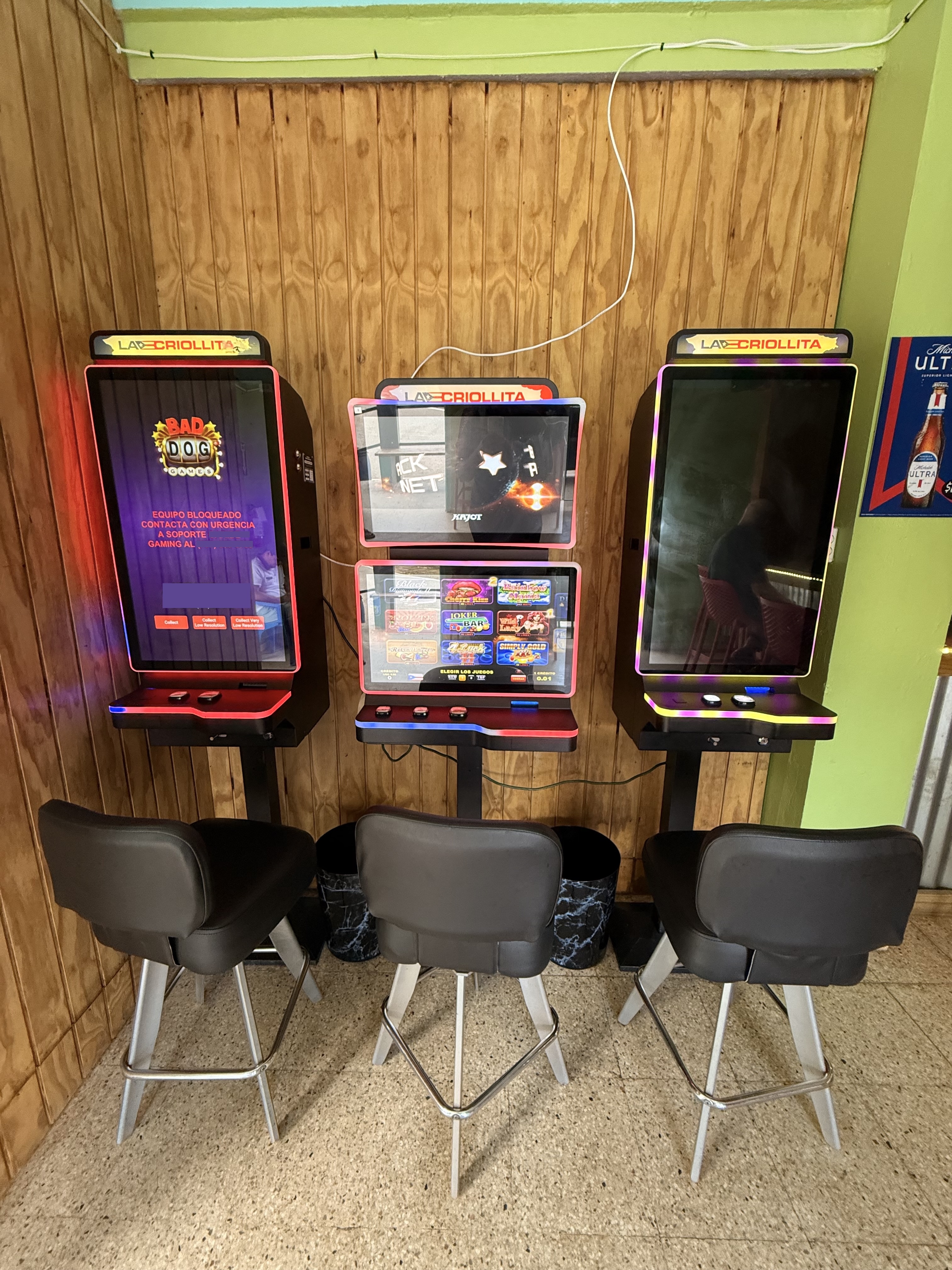
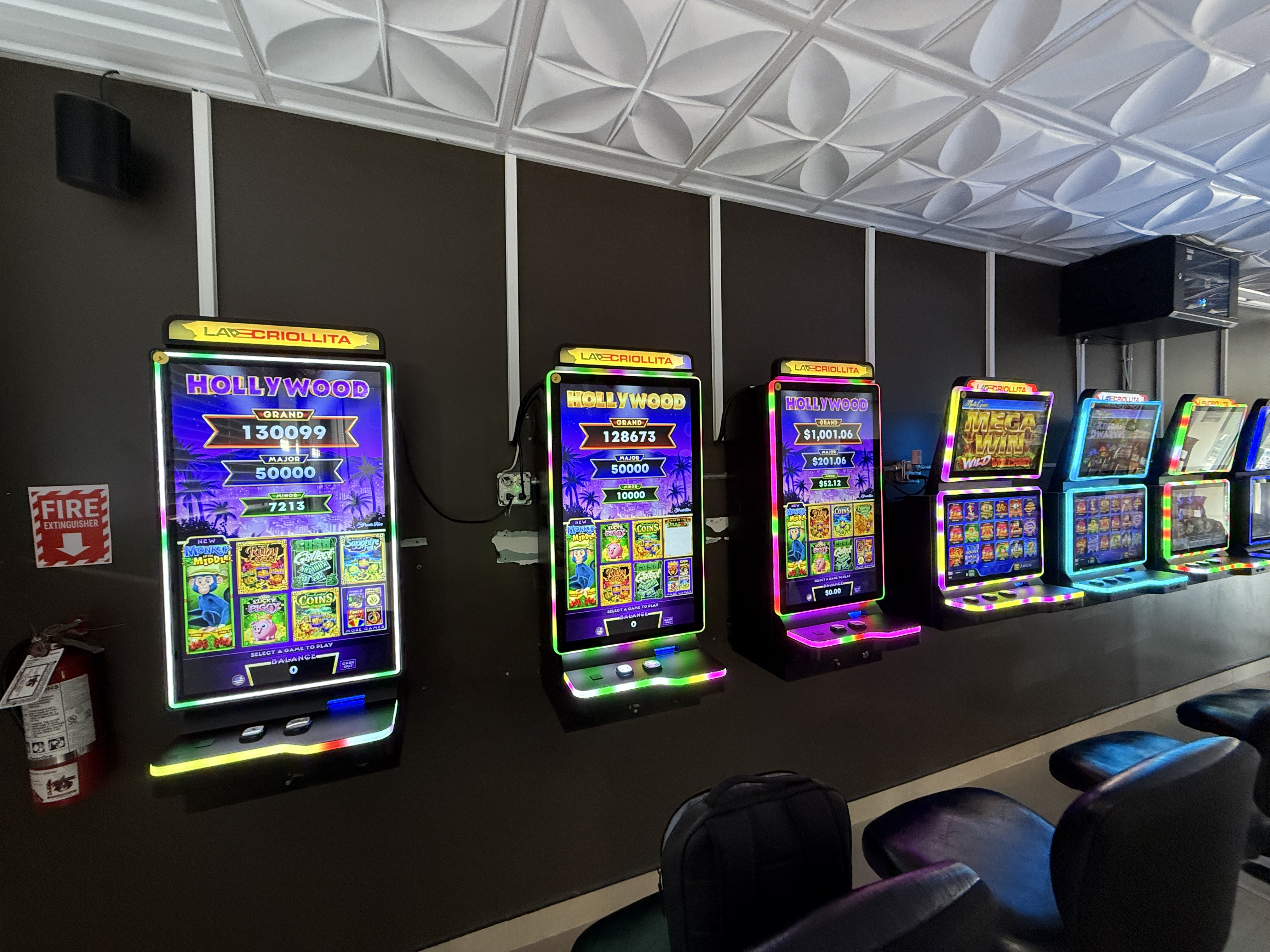
The before state, in the field.
Left machine: locked, displaying the Bad Dog blocked screen in Spanish. Center machine: powered off by the venue owner to avoid running up the electric bill while waiting for a technician. Right machine: the only one earning revenue.
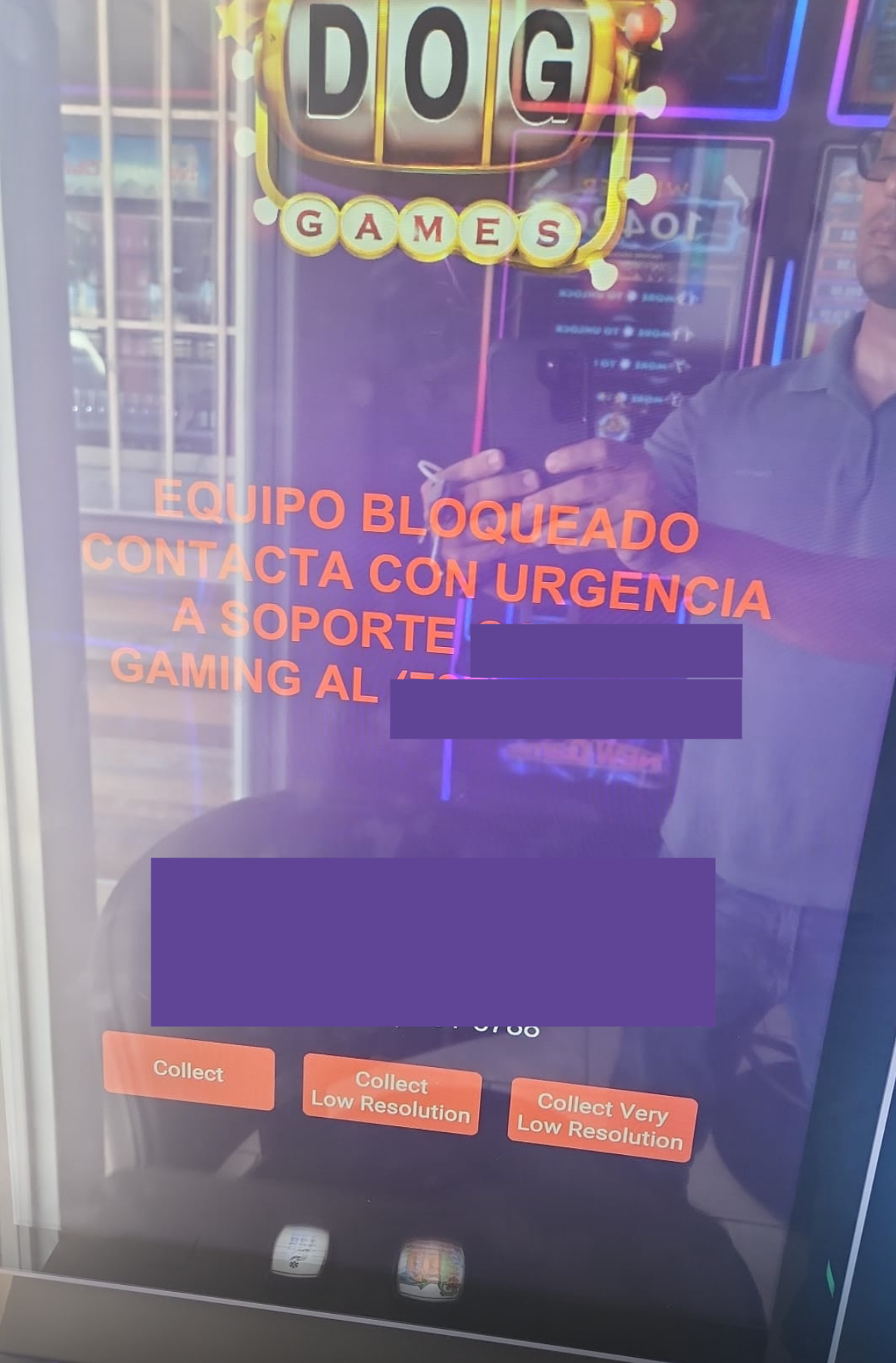
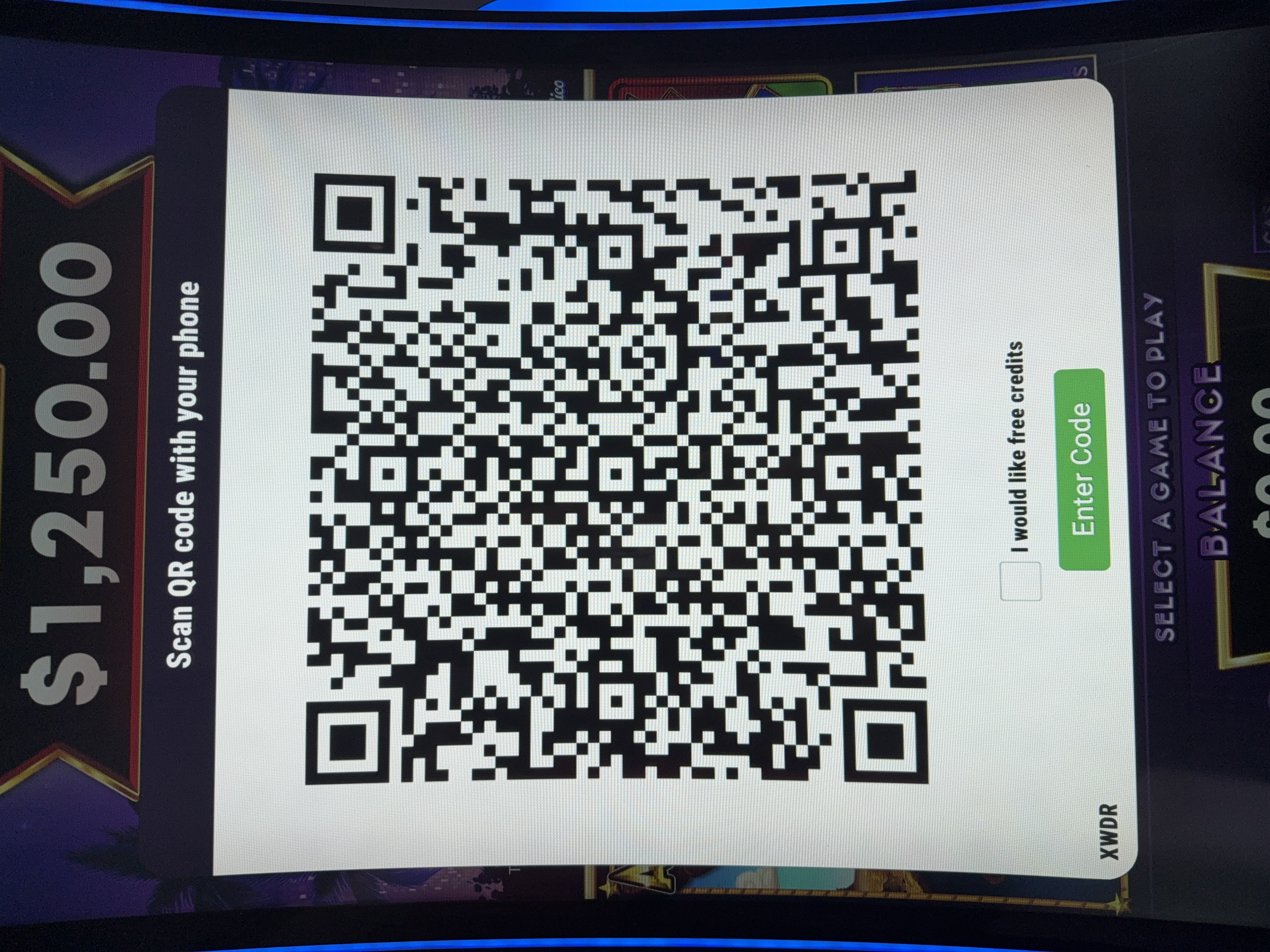
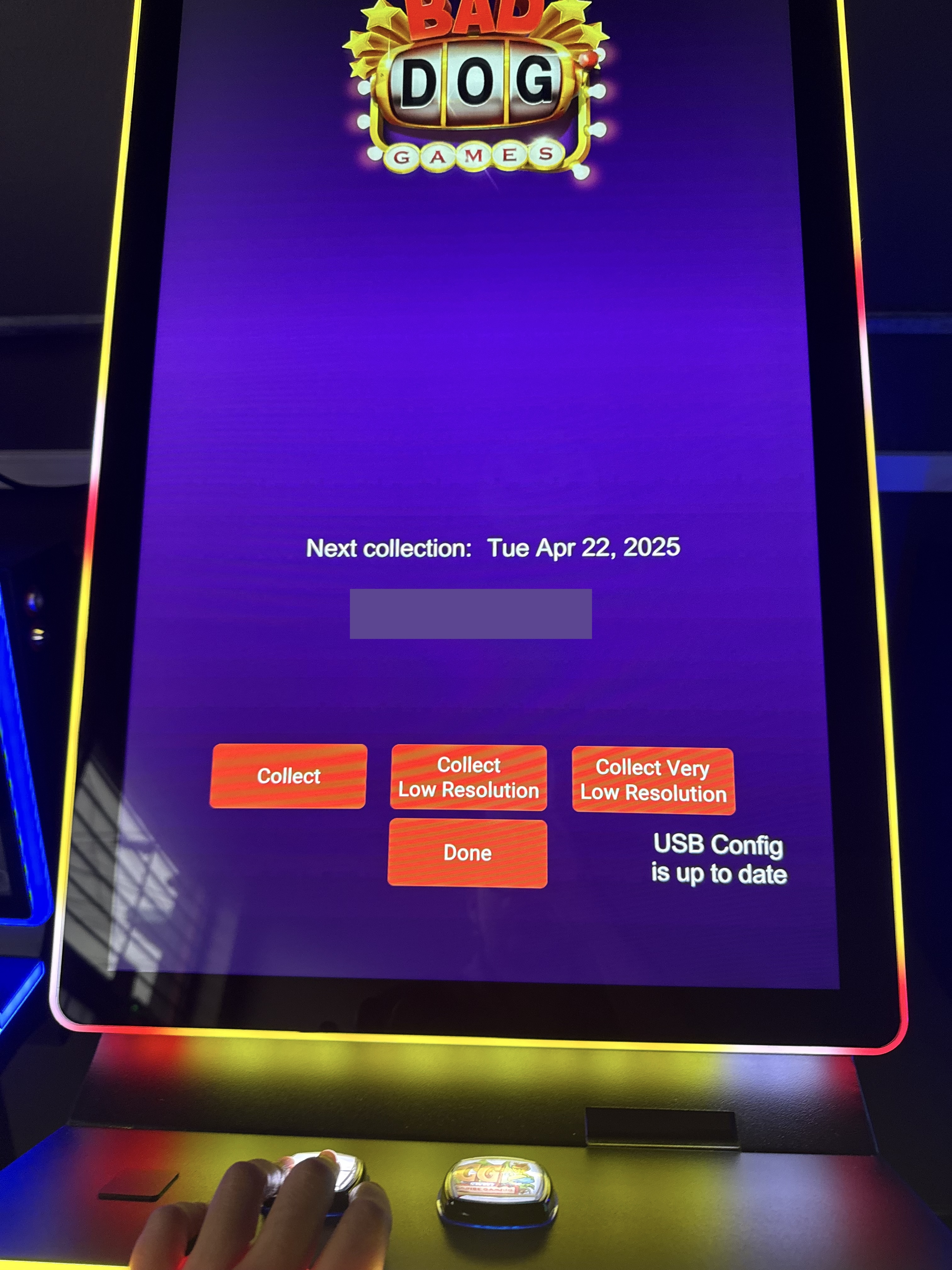
The lockout screen.
"EQUIPO BLOQUEADO" (Equipment Locked). Operators received this message and a phone number. Some called. Many just turned the machine off and waited.
The Full Damage Chain
Machine hits Day 7 without a technician scan
The RMS system requires a data collection scan every 7 days. When technicians missed their route, the machine locked itself. Routes could span hours of driving. One technician. Multiple locations. One broken app.
Machine locks. Venue owner can't resolve it.
The lockout screen displays a support number. Many owners didn't call. They just turned the machine off to stop paying electricity on a device earning nothing.
Machine sits dark until the next collection visit
If it locks on day 7 and the next scheduled visit is 30 days out, that machine earns zero revenue for 30 days. No alert. No escalation. No one knows.
Word spreads between venue owners
Bar and gaming venue owners talk. "The Bad Dog machines lock themselves and it takes forever to get someone out." Bad Dog was losing new placement deals before machines were ever installed, because of reputation damage from a data collection process.
Growth stalls
Not because of the product. Not because of the games. Because the infrastructure behind the machines had never been properly designed.
How bad it actually got
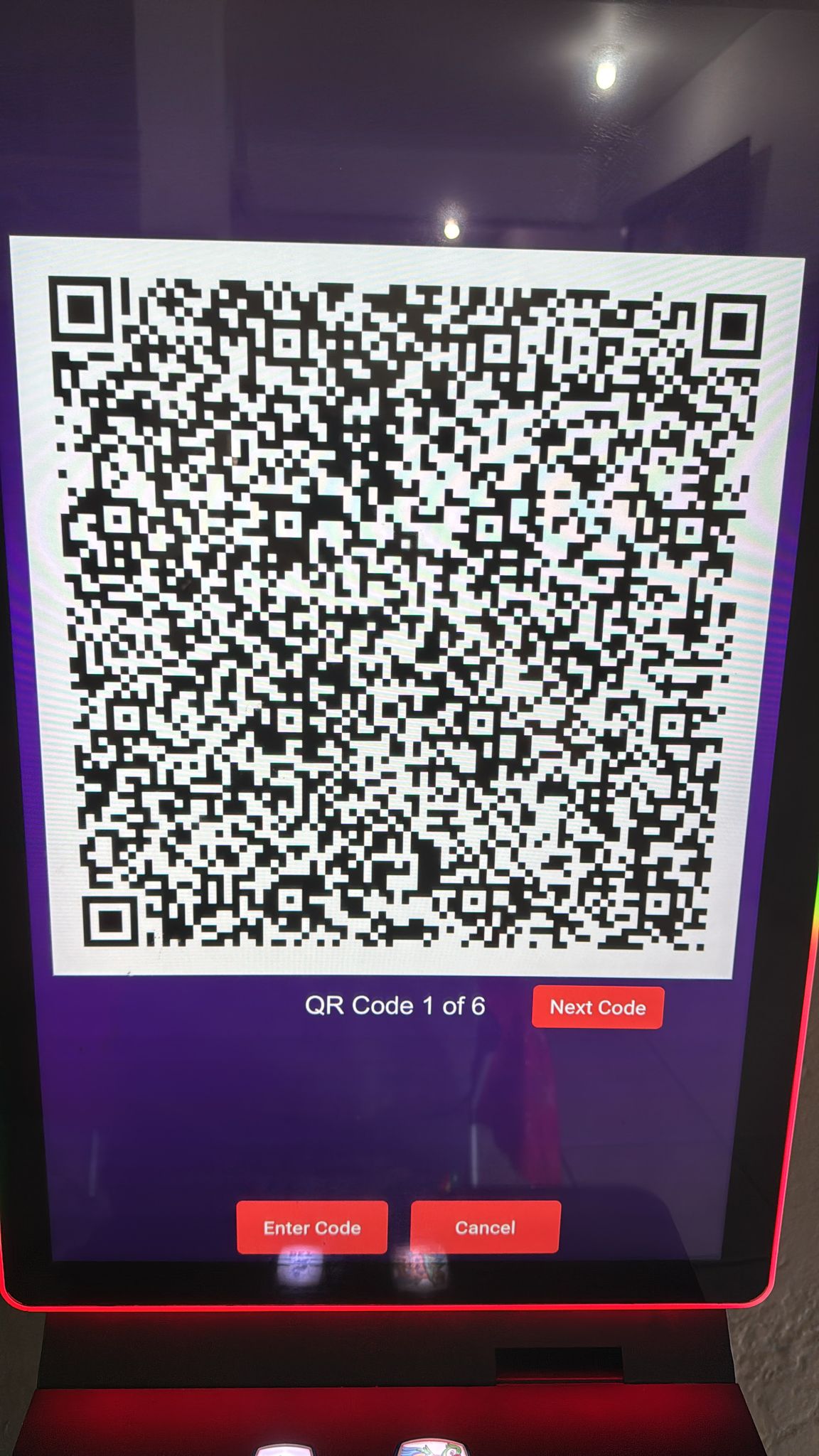
The WhatsApp workaround
When the proprietary technician app failed to scan the QR codes (which it did regularly), operators would photograph the machine screen and send the images to me via WhatsApp. I would then attempt to decode the QR codes from a phone photo, often taken at an angle, under venue lighting, with glare across the screen. A single point of glare covering any part of the code's dense matrix of pixels made the entire code unscannable. One affected section and the whole read failed. Sometimes this process took 15 to 30 minutes per machine. Sometimes it wasn't possible at all. Technicians had long routes to complete and sometimes drove four hours for a single location. Multiple technicians were occasionally dispatched to one venue for one machine.